
Content and images from “The Adinkra Dictionary: A Visual Primer on the Languages of Adinkra” by W. Bruce Willis, 1998

Adinkra Symbols
Originating in Ghana, “adinkra” translates to: a message one gives to another when departing. Adinkra symbols reflect traditional ideas, communal values, philosophical concepts, codes of conduct, and social standards. These symbols are placed on various types of clothing to symbolize parables, proverbs, popular sayings, historical events, hairstyles, traits of animal behavior and shapes of man-made objects. While the symbols originated in Ghana, they are widely used across the African Diaspora for a variety of occasions.

akoben
(ah-ko-ben)
Symbol of vigilance, wariness, readiness to be called to action

bese saka
(bes-e sah-ka)
Symbol of affluence, power, abundance, plenty, togetherness, unity

dame-dame
(dam-ee dam-ee)
Symbol intelligence and ingenuity

gye nyame
(jeh-N-yah-mee)
Symbol of the omnipotence, omnipresence and immortality of God

NEA ONNIM NO SUA A, OHU
(nee-yah o-nim no su-wa o-hu)
Symbol of knowledge, life-long education and quest for knowledge
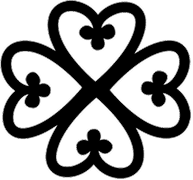
nyame dua
(n-yah-may doo-ah)
Symbol of God’s presence and protection

NYAME NTI
(n-yah-may n-tee)
Symbol of faith and trust in God